Elite Partnerships for CEO's

We work with a select few. By design.
The companies that endure are shaped as much by who they choose to work with as by what they choose to do. We are deliberately selective, and we expect the same discipline from the CEOs we partner with.
Selectivity isn't exclusivity for its own sake. It's a filter. We work with leaders who are both willing; open, coachable, ready to be told the truth, and capable; already operating near the top, with the runway to go further. Willing without capable plateaus. Capable without willing resists. We invest where both are present, because that's where the work compounds.
A handful of partnerships a year. Chosen carefully, on both sides.
The technical edge is gone. AI erased it.
What's left is the part no model can replicate, character, conviction, and the nerve to decide when the data runs out.
We were built for exactly this. The CEOs who outperform aren't smarter. They're more decisive, they engage for impact, they adapt before they're forced to, and they deliver without drama.
That isn't taught in a workshop. It's forged under pressure, in partnership, against real stakes.

Why this partnership?
Most consultants and coaches polish the leader and call it progress. We don't.
We work the whole system at once: you, your team, and the architecture that connects them, because optimizing one while ignoring the other two is how good CEOs quietly underperform.
This is one relationship that does three jobs: strategic advisor, executive coach, and organizational architect. Anchored in your P&L, your board, your growth mandate, never abstracted from them.
It is not a vendor relationship. It is a seat beside you at the top. We take very few. That's the point.
The Value We Create
Most advisory work produces decks. Ours produces decisions, and the durable performance that follows them. The partnership compounds across three levels, the same three where your leverage lives:

You - Sharper at the Top
You decide faster and with more conviction, because you finally have a thinking partner with no agenda but your performance. Your judgment gets tested before the market tests it. Your blind spots get named while they're still cheap. You walk into the board, and the room calibrates to your clarity, not your title.

Your Team - Multiplied, Not Just Managed
The team stops protecting turf and starts owning outcomes together. Decisions that used to stall at the top get made and held. Conflict turns productive instead of personal, and the right people are visibly in the right seats. The result isn't a nicer team, it's a team that produces more than the sum of its members, reliably, under pressure.

Your Enterprise - Built to Endure
Strategy stops dying on the way to execution. Information moves at the speed the market demands, governance gets clearer, and succession stops being a risk and becomes a strength. The board's confidence in your trajectory deepens, not because you said the right things, but because the system is visibly producing.
The through-line is simple: a more decisive CEO, a multiplying team, an enterprise designed to deliver. That is performance that outlasts any single quarter, initiative, or cycle.
What I Bring to the Table
Three disciplines most firms sell separately. We integrate them into one, because that's where the multiplier lives.
A consultant diagnoses. An advisor counsels. A coach develops.
We do all three, in one relationship, because optimizing any one in isolation produces diminishing returns. Strategic advising sharpens the call. Executive coaching builds the leader making it. Action learning turns your real, highest-stakes challenges into the vehicle for both.
But here's the difference that lasts. We don't do the work for you and hand you a deck. We facilitate you and your team to do your own work, on your own challenges, so the act of doing it builds the capability to keep doing it long after we're gone. You don't rent our judgment. You build your own.
That's the point of the partnership: not dependency, but durable capability you own.
We bring demonstrated command across the terrain where CEOs actually win or lose:
1.
Elite Leadership
What great looks like in how you think, decide, and lead when the answer isn't obvious.
2.
CEO & Executive Assessment
Selection and development grounded in evidence, not impression; who has runway, who needs investment, who's in the wrong seat.
3.
Top Team Elite Performance
Building teams where the configuration produces more than the sum of its members.
4.
Strategy to Execution
Turning intent into structure, decisions, and the systems that carry them.
5.
Culture, organization design, and ways of working
Designing how the enterprise decides, moves information, and delivers.
Strategic Insights
Here’s what we think on some of the most pressing issues for CEO’s and their teams.
STRATEGIC INSIGHT 1

AI Killed the Technical Edge
Why AI transformation is a leadership team design problem
For twenty years, a CEO could win on analysis, command of detail, or sheer data horsepower. AI just commoditized all three. What's left is the part no model can run: character, conviction, and the judgment to decide when the data runs out. That's not a disadvantage. For the right leader, it's the whole game.
(Read full article.)
STRATEGIC INSIGHT 2

The Architecture of a Champion
What the New York Knicks Just Proved
About Elite Teams
When I watched the Knicks at the trade deadline, I did not see a team that was struggling. I saw a team that was being configured under fire, and the configural pattern was already legible to anyone who had been close to elite-team building. Five things were in place by February that, in my experience, almost always foreshadow a championship outcome, and the absence of any one of which almost always predicts collapse. Allow me to name them in the order they appeared.
STRATEGIC INSIGHT 3

Your Team Is Your Biggest Lever, and You're Flying Blind
CEO self-awareness isn’t a soft skill. It’s the enterprise immune system -- and when it fails, nothing else can self-correct.
The CEO's greatest performance lever isn't technology, talent, or strategy sophistication, it's the configuration and health of the leadership team. Individual excellence doesn't add up to team excellence; the unit that matters is the combination. Most CEOs can't see it. 88% are deploying AI and 81% get nothing for it, not a technology failure, a team-design failure. We make the invisible visible, then build the team that compounds.

40 Years Inside Fortune 100 Companies
There is a person on the other side of this partnership. But the value isn't one person, it's everything that person carries into the room.
For forty years I have lived at the intersection of leadership, psychology, and business, twenty of them inside Fortune 100 companies running the transformations, twenty beside the CEOs and boards who own them. I've made the calls, not just advised on them. I've sat where you sit, with the same incomplete information and the same weight, and I've learned what actually separates the leaders who endure from the ones who merely arrive.
That is where the “we” comes from.
You are not buying my time, you are buying everything that came before you, pointed at what's in front of you.
Every CEO I've partnered with, every team I've diagnosed, every transformation that worked and every one that taught me why it didn't, none of it left when the engagement ended. It accreted. It became pattern, then judgment, then instinct. So, when I sit beside you, you don't get one advisor's opinion. You get the compounded intelligence of four decades of consequential rooms, configured to your specific situation. Each client makes the next partnership sharper. You are not buying my time, you are buying everything that came before you, pointed at what's in front of you.
That archive is what lets me see your team's dynamics before they surface, name the undiscussable before it metastasizes, and tell you the truth your organization is too invested to tell you. It's not a framework I apply. It's judgment I've earned.
But the archive only earns its seat if the person carrying it can be trusted with it. CEOs let me into the rooms that matter for reasons no credential confers, candor without an agenda, discretion that's never once been in question, and the willingness to say the hard thing precisely when it's least convenient and most needed. I am not here to be liked. I am here to be useful at the level where useful is rare.
Few CEOs have access to it. Fewer still are ready to use it.
That is the configuration: an operator's scars, an advisor's distance, a four-decade archive, and the trust to wield all three at the top. Few CEOs have access to it. Fewer still are ready to use it. If you are, that's the conversation worth having.
Let's start a conversation.
A company’s long-term success is shaped not just by what it does, but by who it chooses to work with.
Being selective about our clients allows us to focus our energy and results to those committed leaders who value excellence, accountability and continuous improvement. This creates a shared mindset where both parties push toward deeper collaboration, stronger outcomes and meaningful growth.
If you're ready for elite performance, let's start a conversation.
Text or email to: john.boyle@convergencypartners.com to schedule an appointment for a discovery call. We'll take as long as we need to make sure we answer all your questions.
We look forward to hearing from you.

The Story Behind the Knight
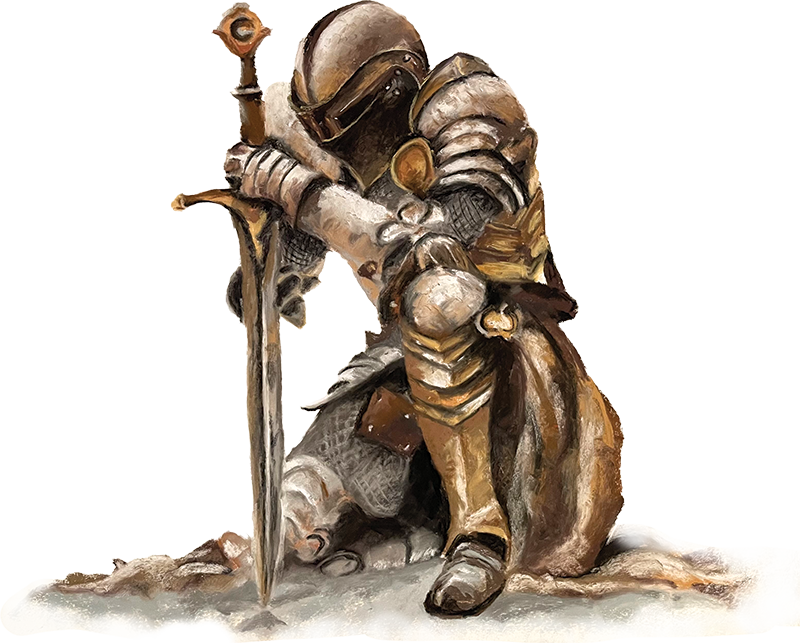
ConvergencyPartners embodies the philosophy that exceptional leadership is forged through discipline, strategic clarity, and purposeful action.
The knight symbolizes the trusted partner who stands beside the CEO—steadfast, loyal, and unwavering in service to the leader’s mission. Throughout history, the most successful leaders were rarely alone; they relied on trusted advisors, confidants, and guardians who could provide counsel with honesty, discretion, and courage.
Kneeling beside the sword, the knight symbolizes disciplined strength guided by purpose. The posture reflects humility, not submission—the confidence to serve rather than seek the spotlight. The sword represents clarity, truth, and decisive action, while the armor signifies resilience through adversity and the ability to remain steadfast under pressure.
At ConvergencyPartners, we embrace this role. We are the trusted confidant who can challenge assumptions, provide perspective when the stakes are highest, and stand alongside leaders through moments of growth, uncertainty, and transformation. Our commitment is unwavering: to help CEOs see clearly, decide confidently, and lead effectively.
The mark embodies the belief that every great leader deserves a trusted partner—one who is dedicated, unflinching, and loyal to their success.